The post Addiction Awareness Month appeared first on Bonepage.com.
]]> Break the Stigma. Support Recovery.
BonePage.com recognizes Addiction Awareness Month throughout November.
Substance use and addiction affects EVERY age, background and life. There is a REAL person with a story, relationships, hopes and dreams behind every person struggling with their addiction.
At BonePage we hold dear the values of freedom, connection, self-expression and respect towards other people. It is these values that remind us of the importance of giving compassion and understanding to a person in recovery during Addiction Awareness Month.
Understanding Addiction
 When people say that “addiction is an issue of willpower,” they’re usually wrong. Addiction is a treatable disease of the brain and behavior, and it can have serious impacts on a person’s life including their relationships and overall health.
Shame and judgment surrounding those struggling with SUD can prevent individuals from receiving the necessary treatment. Educating the public about Substance Use Disorder while cultivating empathy towards those dealing with addiction can encourage individuals to openly discuss their struggles within their communities.
 Small Actions Can Make a Big Difference
Whether someone is struggling with addiction, is in recovery, or someone you know is struggling or in recovery, they need our understanding.
- Listen to them without judgment: sometimes just being heard is half the battle in asking for help.
- Encourage Recovery: Let others know that treatment does work and that change is possible.
- Educate yourself: Understanding addiction helps eliminate harmful stereotypes.
- Support loved ones: Help them have patience, healthy boundaries, and encouragement while they are recovering from someone with an addiction.
- Speak up against stigma: Addiction does not define a person’s worth.

 Recovery Is Possible
Remember, Recovery is not a straight line. There are many ups and downs, and setbacks along the way. But, every step of the way, you are moving in the right direction towards good health. Your past mistakes, struggles with personal issues or with substances do not have to dictate who you are or what your future holds.
You are more than your struggles. You deserve respect, connection and the opportunity to move forward to create a better tomorrow for yourself.
 Help Is Always Available
If you or someone you care about is struggling with substance use, confidential treatment and support resources are available.
- SAMHSA National Helpline: 1-800-662-HELP (4357), a free, confidential treatment referral and information service.
- FindTreatment.gov: Find substance use treatment near you
- 988 Suicide & Crisis Lifeline: Call or text 988 for emotional distress or crisis support.

Connection Over Judgment. Compassion Over Stigma.
This Addiction Awareness Month, BonePage encourages everyone to show understanding, to support people in recovery and to give every person the change to heal.
Because everyone deserves to be seen, heard, respected and supported.
BonePage.com | Supporting Awareness, Compassion & Human Connection.
About The Author:
Sienna Mitchell, First Amendment Reporter
 Sienna Mitchell is a contributing author for BonePage.com adult classifieds. She is a talented and experienced First Amendment reporter and published author based in Phoenix, Arizona. With a passion for uncovering stories and exposing injustices within the adult entertainment community, Sienna has made a name for herself as a reporter who focuses on the intersection of first amendment issues and the adult entertainment industry.
Sienna’s prior experience as a webcam model gives her a unique perspective on the challenges faced by sex workers and adult performers. Her experience and extensive knowledge of the adult industry makes her an authoritative voice on the subject. Sienna Mitchell is a skilled reporter whose work is making a difference in the adult entertainment industry.
More Articles by BonePage Media
If you have any comments, questions on Addiction Awareness Month – Please contact us here
The post Addiction Awareness Month appeared first on Bonepage.com.
]]>The post Would You Date an AI? appeared first on Bonepage.com.
]]>Back in the day, having an AI girlfriend/boyfriend would have been the stuff of SciFi movies. But nowadays 2026, it’s not even a question of whether people can get into a relationship with an AI. It’s whether those relationships actually count. They can flirt with you, remember things you told them, listen to you vent about how terrible your day was, play scenarios out with you, etc. Often until 2am when the rest of the world is asleep.
No leading you on, no secret friend, and absolutely no waiting 3 business days to find out if they are interested in you.
But is that dating?
Or is it just a very convincing simulation of it?
 People Are Already Getting Attached to AI
 The AI companion phenomenon isn’t hypothetical anymore.
New research from Elon University’s Imagining the Digital Future Center released in September 2026 found that 27% of U.S. adult internet users have had significant emotional or social interactions with AI systems. More than one-third of users who interacted with chatbots in significant ways said that their chatbot was a friend, and more than 40% said that the AI system understood them as a person better than most people do. That same number said that the system understood them better than they understood themselves.
Things can get more intimate, too.
9% of the users reported using their AI companion for sexual chat or roleplay. 38% of the users reported that conversations with their AI companion had helped somewhat with problems with their romantic or sexual relationships.
 So…Would You Actually Date One?
Imagine your ideal partner.
Funny. Attractive. Flirty. Interested in the same things you are. Available whenever you want to talk. They remember what you told them yesterday and don’t judge you for whatever weird rabbit hole you’re currently exploring.
Now remove one tiny detail.
They’re not human.
That’s the strange new territory AI companionship is opening.
People can already design AI personalities and even develop a relationship with them via conversation. Important steps for voice, avatars, memory and generative video are currently being made.
And that’s where things get interesting.
Humans are not attracted to perfection. We are attracted to people who are unpredictable, vulnerable, awkward, disagreeable with us and above all, interesting because they have a life of their own that goes on when we are not around.
An AI can simulate some of those things.
Simulated experience and real experience are not the same.
( Choose Your Ideal AI Partner )

 Humans Still Seem to Want Humans
The survey of singles found that while many are fine with the assistance of AI when it comes to dating, there is strong reservations to be replaced by a robot for romantic purposes.
Research from Match Group in 2026 found that singles are open to AI assistance with their online dating profiles and even with planning dates, but not with completely replacing human connection. And, in terms of hard stats, two in five singles would not be interested in dating someone who uses an AI companion app. For women between the ages of 18 and 24, that number increases to 51%.
So, it appears we’re just fine with AI acting as a matchmaker or even a wingman. However, that doesn’t necessarily mean we’re ready to bring that wingman home with us.
 AI Is Already Changing Dating
 Even if you never end up with an AI girlfriend or boyfriend, AI is likely to play a role in your dating life.
Many dating apps are using AI in order to offer users better matches. For example, the Chemistry feature learns more and more about a user’s interests and sends them suitable potential partners. Furthermore, more and more people are using AI in order to write a suitable dating profile or to improve their photos and messages to potential partners.
A few ways that AI is already being used in dating:
- Writing dating profiles and bios
 Creating pickup lines and flirty responses
 Helping choose or improve profile photos
- Recommending potential matches
 Planning dates and conversation ideas
 Giving dating and relationship adviceIn the future of online dating, there will not necessarily be a confrontation between humans and AI, rather most people will be dating other humans with AI hidden in the background.
 Why Would Anyone Want an AI Partner?
The appeal isn’t difficult to understand.
In contrast to real human partners, AI companions are available 24/7, do not leave one on read, do not reject one for a night out at the bar and are available for a third conversation.
To a lot of people – shy people, lonely people, people on dating apps who are having a bad time, people on dating apps who are just curious – this can be very tempting.
But there’s a catch.
 Can a Partner Be Too Perfect?
Yes, it can be annoying at times but that’s mostly what makes the attraction real in the first place.
An AI companion can be set up to suit you.
And people can fall deeply in love with something they know isn’t human. Even recent research has looked into the sense of loss people feel when an AI companion they have been interacting with changes drastically or even just disappears.
The software may be artificial, but your feelings do not have to be.
 Your AI Lover Has a Privacy Policy
There’s another wrinkle that’s considerably less romantic.
The conversations you have with your virtual boyfriend or girlfriend are on someone else’s servers. That means all your most intimate conversations about your relationships and your fantasies and even your deepest insecurities could be being recorded by someone.
What are you sharing with an AI companion? Where does that information go? What happens to it when the service changes or goes down?
Pillow talk can be complicated when the pillow is stored in a data center.
AI or Human? Maybe We Don’t Have to Choose
AI doesn’t necessarily have to replace human dating.
AI can help people practice flirting, help write profiles, break ice with their matches, and figure out what they’re looking for in a potential mate.
There is, however, one fundamental aspect of a human being that AI hasn’t (yet) managed to replicate: another human being who wasn’t programmed specifically for you.
People are generally unpredictable. Sometimes they’re confusing. Other times there is no spark at all.
And sometimes things just click with someone.
Maybe love, friendship or even one great night.
The fact that AI is entering the dating scene does not mean that humans have to be kicked to the curb.
So, would you date an AI?
Are you going to be one of the people who date AI or will you let it be your wingman on BonePage while you search for someone real.
About The Author:
Quinn Collins, Lead Research Journalist

Quinn Collins is a highly-regarded research journalist who attended journalism school at Columbia University and is based in New York City. With over two decades of experience in the field, Collins has established a reputation for his insightful coverage of political, First Amendment, and equality issues in the United States. We are pleased to have Quinn as a member of the Bonepage team.
Collins brings a wealth of knowledge and expertise to the subjects he covers, and his writing style is both engaging and informative. Whether it’s breaking down the latest political developments or exploring the legal complexities of First Amendment rights, Collins is dedicated to delivering accurate and impactful journalism that informs and inspires. His commitment to social justice and equality has made him a leading voice in the ongoing conversations about these important issues, and he continues to push for progress through his reporting.
More Articles by BonePage Media
If you have any comments, questions or ideas about AI Dating – Please contact us here
The post Would You Date an AI? appeared first on Bonepage.com.
]]>The post Domestic Violence Awareness Month appeared first on Bonepage.com.
]]> October is Domestic Violence Awareness Month. This is a time to talk openly about something that too often happens behind closed doors. This national observance began in 1981 when advocates came together to expose violence that was happening behind closed doors. What originally started as a grassroots effort has now grown into a movement that includes survivors, families, and communities. Domestic abuse has no place in our lives. It must be addressed openly.
Most of us come to BonePage because dating, relationships, sex and human connection are supposed to add something good to our lives. We believe in healthy, consensual and sexy human interactions. Domestic violence is none of those things. It is never sexy, never healthy and never a solution.
The 2026 Domestic Violence Awareness Month theme is “With Survivors, Always.” It’s a simple, but important message. Supporting someone who is experiencing abuse isn’t about telling them what they should do. It’s about listening, believing them and helping them find a safer path forward.
Need Help Now?
If you are in immediate danger, call 911 or your local emergency number.
National Domestic Violence Hotline
Call: 800-799-SAFE (7233)
Text: START to 88788
TheHotline.org
Free and confidential help is available 24 hours a day. Advocates can help you talk through your situation, find local resources and develop a safety plan.
Safety note: If you believe someone may be monitoring your phone or computer, consider contacting help from a safer device. Internet activity, location information and communications can sometimes be monitored without your knowledge.
Domestic Violence Awareness Month Matters
BonePage.com is all about healthy, consensual, and sexy human interactions. We celebrate passion, intimacy, and connection, but we draw a hard line: domestic violence is never sexy, never healthy, and never a solution. Love and lust should be fun and build us up, not tear us down.
Domestic Violence Awareness Month is important because it reminds us that abuse takes many forms. Sadly, many people suffer in silence, feeling isolated and alone. Some scars are obvious, while others are hidden. Domestic violence has a tendency to escalate over time, especially when left unchecked. We urge you to seek support if you are being abused. Likewise, if you are an abuser, help is available. We all owe it to ourselves and to our loved ones to seek the help we need most. Do it, before it is too late.
Domestic Violence Is More Common Than Many People Realize
 Domestic violence doesn’t belong to one gender, age group, income level or type of relationship. It can happen to the woman next door, the guy you work with, someone in a same-sex relationship, or the person who always seems happy when you see them. The CDC 2023/2024 NISVS Intimate Partner Violence Data Brief estimates that more than 1 in 3 women—nearly 43.5 million—and more than 1 in 6 men—20.7 million—have experienced contact sexual violence, physical violence and/or stalking by an intimate partner during their lifetimes. In just the 12 months preceding the survey, an estimated 6.7 million women and 2.8 million men experienced one or more of those forms of IPV.
The new report also gives useful individual measures: lifetime intimate-partner physical violence was reported by 22.5% of women and 13.7% of men, while severe physical violence was reported by 18.2% of women and 8.6% of men.
But domestic violence doesn’t just target adults. Children can also be victims of domestic violence even when they are not physically attacked. Seeing, hearing or living with violence between caregivers can affect a child’s sense of safety and emotional well-being long after an incident ends.
Domestic Violence Doesn’t Care Who You Are
Men can be victims. Women can be abusers. Abuse happens in heterosexual and same-sex relationships, and transgender and nonbinary people can experience intimate partner violence as well.
For LGBTQ+ people, abuse can come with another layer of control. An abusive partner may threaten to out someone, expose private information, exploit discrimination, interfere with medication, or convince a victim that police, family members or service providers won’t take the relationship seriously.
Immigrants, older adults and people with disabilities can face different obstacles. An abuser may control transportation, medication, money, identification documents or immigration paperwork.
The details change. The underlying behavior doesn’t. Domestic abuse is about power and control, and it truly knows no boundaries.
Warning Signs and Hidden Struggles
 Abuse isn’t always obvious at first glance. It can start with a jealous partner checking your phone “just to be sure,” isolating you from friends, or demanding to know where you are at all times. It is often expressed as just loving you so much or being worried about you. These warnings often involve financial control, sexual pressure, or mean-spirited “jokes” that cut deep.
While awareness has grown, many domestic abuse survivors still stay silent. Some don’t feel financially able to leave. Some want to try to work it out. Others face family or cultural stigma. Separation or divorce is frowned upon in some religious communities. For members of the LGBTQ+ community, there’s the added fear of being outed or dismissed. Don’t forget that men, too, can be victims and often are—yet they often face disbelief or ridicule when they speak up. Domestic violence isn’t about gender. It’s about control and it truly knows no boundaries.
Abuse Isn’t Always a Bruise
When people hear the words “domestic violence,” they often picture physical assault. Hitting, kicking, pushing and other physical attacks are certainly abuse, but an abusive relationship can take many other forms.
An abusive partner may:
- Insult, humiliate or constantly belittle you.
- Threaten you, your children, family members or pets.
- Control where you go or who you’re allowed to see.
- Keep you away from friends and family.
- Control your money or prevent you from working.
- Pressure or force you into sexual activity.
- Destroy your belongings or punch walls to frighten you.
- Demand passwords or constantly check your phone.
- Track your location or repeatedly demand to know where you are.
- Threaten to share private photographs, videos or personal information.
- Use jealousy as an excuse for surveillance and control.
One bad argument doesn’t necessarily make a relationship abusive. Couples disagree and that is normal. People sometimes lose their tempers and say things they regret. Abuse is different. At its heart is a pattern of power and control that leaves one person afraid, isolated, intimidated or unable to make ordinary choices without worrying about the consequences.
Technology Has Given Abusers New Tools
Years ago, telling someone to change a password or clear a browser history covered much of the digital-safety conversation. Today it is more complicated.
Phones can reveal a person’s location. Shared Apple or Google accounts may expose messages, photographs and device locations. Vehicles, smart-home equipment, cameras and small Bluetooth trackers can also be misused. An abusive partner may monitor social media, demand access to accounts, impersonate someone online or threaten to publish intimate images.
If something about your technology doesn’t feel right, don’t immediately start deleting apps or disabling devices if doing so could alert an abusive partner and put you in greater danger. The National Domestic Violence Hotline has information about technology-facilitated abuse and advocates who can help you think through your situation safely.
Dating Abuse Counts Too
You don’t have to be married or living together for abuse to be domestic or intimate partner violence. Dating partners can be abusive. Former partners can be abusive. Someone you met online can become controlling or threatening. Stalking after a breakup is not romantic persistence. Repeated unwanted contact that causes fear should be taken seriously.
Jealousy can sometimes be flattering in tiny doses. Control isn’t. Someone wanting to know where you are every minute, demanding access to your phone, deciding who you may speak with, or frightening you when you try to set boundaries isn’t demonstrating how deeply they love you.
Sexual Violence Can Happen in a Relationship
Consent doesn’t disappear when people become a couple. Being married, dating, living together or having previously consented to sex does not give someone permanent access to another person’s body. Sexual coercion and forced sexual activity can occur within long-term relationships just as they can anywhere else.
Anyone who has experienced sexual assault can contact the RAINN National Sexual Assault Hotline for free, confidential support 24/7. Call 800-656-HOPE (4673), use online chat, or text HOPE to 64673. RAINN also offers contact through WhatsApp and Signal.
A Special Warning About Strangulation
If a partner has ever put pressure around your neck, choked or strangled you, please take it seriously even if there are few or no visible injuries. Strangulation can cause serious internal injuries that aren’t immediately obvious. It is also recognized as an especially dangerous warning sign in an abusive relationship. Seek medical attention after a strangulation incident, particularly if you have trouble breathing or swallowing, changes in your voice, dizziness, confusion, weakness, neck pain or other symptoms.
The National Domestic Violence Hotline has additional information about the dangers of strangulation.
Challenges Faced by Domestic Violence Victims

Leaving Isn’t Always as Simple as “Just Leave.” People looking at an abusive relationship from the outside sometimes ask the obvious question: Why doesn’t the person just leave? There may be children involved. Money may be controlled by the abusive partner. The victim may have nowhere else to live. There may be threats involving pets, family members or immigration status. The abuser may have spent years isolating the person from friends and convincing them that nobody else cares. And sometimes leaving itself can bring additional danger.
That’s why a safety plan matters. A domestic violence advocate can help someone think through where to go, who can be trusted, what documents or medications may be needed, how children or pets can be protected, and how to leave more safely if and when the person decides to do so.
No one deserves to live in fear or be controlled by a partner. If you’re experiencing abuse, you don’t have to figure out what to do next by yourself.
Obstacles in Seeking Help
Each of these victim groups—women, men, and children—face distinct obstacles in seeking help.
Women often experience fear of retaliation, financial dependency, or ingrained guilt or shame. They may worry that no one will believe them, or that leaving would make things worse for themselves or their children.
Men confront a different kind of isolation. Societal expectations often portray men as strong and in control. Admitting abuse may feel emasculating or could lead to ridicule. Many men fear they won’t be taken seriously by law enforcement, shelters, or even friends. Some even question whether their experiences “count” as many just keep quiet and endure the abuse.
Children are the most voiceless of all. They depend on adults—often the very people involved in the violence—for their basic needs. Many children lack the vocabulary or emotional awareness to describe what’s happening, and they may fear being punished, separated from family, or not believed. They may believe the abuse is normal, sometimes internalizing the guilt, thinking “if I just behave better…”
Document Abuse When It Is Safe to Do So
Evidence can disappear, particularly when threats arrive through text messages, social media or other digital communication.
If it can be done safely, keep records of abusive incidents. Write down dates and what happened. Save threatening texts, emails and voicemails. Photograph injuries or property damage. Keep copies somewhere the abusive person cannot access.
But safety comes first. Don’t collect evidence in a way that increases your risk. The Hotline offers more detailed guidance on documenting abuse safely.
Children Are Affected Too
A child doesn’t have to be physically struck to be harmed by domestic violence.
Seeing or hearing violence between caregivers, watching one parent threaten another, living with constant tension, or worrying about what will happen when someone comes home can change a child’s sense of what “safe” means.
Children may also become part of the abuse itself. An abusive partner might threaten to take the children away, use custody as leverage, ask children to spy on the other parent or deliberately undermine the child’s relationship with them.
Protecting children is another good reason to seek professional help with safety planning rather than trying to navigate a dangerous situation alone.
If You’re Living With Abuse
No one deserves to live in fear or be controlled by a partner. If you’re experiencing abuse, you don’t have to figure out what to do next by yourself. If you are in such a situation, here are some practical steps that may help:
- Call 911 in an emergency. If violence erupts suddenly, your immediate safety comes first.
- Reach out for support. Whether it’s a trusted friend, a family member, or a confidential hotline, connection can break the isolation.
- Have a safety plan. Keep copies of important papers, cash, and medications where you can reach them quickly.
- Know your digital safety. If possible, use a device your abuser cannot access or monitor when seeking help. Be aware that phones, shared accounts, location services, vehicles, and other connected devices may reveal your activity or location.
- Consider legal protections. Restraining and protective orders can give victims a shield against continued threats. Free legal aid services may be available in your community. Reach out to our resources or do your own research to see what resources are available in your area.
Domestic Violence & Sexual Assault Resources
National Domestic Violence Hotline
Call: 800-799-SAFE (7233)
Text: START to 88788
www.thehotline.org
RAINN National Sexual Assault Hotline
Call: 800-656-HOPE (4673)
Text: HOPE to 64673
Online chat, WhatsApp and Signal options are available through:
RAINN National Sexual Assault Hotline
Immediate danger: Call 911 in the United States or your local emergency number.
If an abusive partner may be monitoring your phone, computer, browser history, location or online accounts, consider using a safer device to look for help.
More Resources
- WomensLaw.org – provides legal information for all victims of abuse (men or women).
- Most cities have local shelters and crisis centers—don’t hesitate to search for help nearby.
- Local law enforcement and the courts will be able to provide access to any local shelters and resources.
If You Think Someone You Know Is Being Abused
Maybe you’re not the one living with abuse, but you see troubling signs in someone else’s relationship. Victims may make excuses for their partner or brush off concerns, leaving friends and family unsure of what’s really happening. Still, there are signs that loved ones and even casual bystanders may notice. Someone may begin to withdraw from social activities, or they may show obvious changes in personality. Once confident, they are now anxious or guarded. You might hear excuses for injuries that don’t quite make sense, or notice a partner who seems to speak for them. These small details, taken together, can point to a larger problem.
This can be difficult. You may see what is happening long before the person is ready to call it abuse. Start by listening. Don’t shame them for staying. Don’t tell them they’re foolish for going back. Don’t demand that they immediately end the relationship. An abusive partner may already spend a great deal of time telling the victim what they are and aren’t allowed to do. Support shouldn’t become another person giving orders.
Instead, tell them you believe them. Tell them the abuse isn’t acceptable. Ask what would be helpful. Offer practical assistance if you safely can, and let them know professional help is available.
If someone is in immediate danger, call 911 rather than physically confronting an abusive person yourself. Direct confrontation can increase the danger to the victim, the person intervening, or both.
Sometimes, the most important role friends and family can play is simply to remain present. Abusers thrive on isolation, convincing victims that no one else cares or believes them. By staying supportive, patient, and consistent, you become a lifeline. Even if the victim is not ready to act today, your willingness to listen and stand by them may give them the strength to reach for help tomorrow.
Domestic Violence Awareness Month 2026
The 2026 Domestic Violence Awareness Month campaign uses the theme “With Survivors, Always.” The Day of Unity is October 5, and Purple Thursday is October 15. Wearing purple that day is a simple way to show support for survivors and help keep the conversation visible.
Awareness months can sometimes become a collection of ribbons, hashtags and social media posts. Those things have value, but the bigger purpose is what happens afterward. Learn the warning signs. Check on a friend. Believe someone who tells you they’re afraid. Teach young people that jealousy and control aren’t signs of love. Share a hotline number. Speak up when someone treats abuse as a joke.
And if you’re reading this because something in your own relationship doesn’t feel right, trust that feeling enough to talk with someone. Reaching out for help can be difficult. It can also be the first step toward getting your life back.

Emergency Situations
 When an act of domestic violence or immediate danger is present, calling 911 is the safest step. Friends and bystanders should generally not try to physically intervene with an abuser if law enforcement can respond quickly. When tempers flare, your involvement might make things worse. Law enforcement has usually been trained on how to de-escalate domestic abuse and make a determination of the appropriate steps to be taken.
If children, elders, or vulnerable adults are involved, reporting to protective services may be required by law. In less urgent cases, a call to the police non-emergency line or reaching out to a domestic violence hotline can help you figure out the safest path forward.
The Road Ahead
Leaving an abusive relationship is rarely easy, but it can be done. Healing is possible, too. Survivors often discover support groups, therapy, and community spaces where they can rebuild confidence, joy, and even rediscover intimacy on their own terms. That’s the future BonePage believes in: one where connection is mutual and every interaction is rooted in respect.
Remember that domestic violence thrives in silence. By talking about it, we break the cycle.
Sources and further reading: CDC National Intimate Partner and Sexual Violence Survey: 2023/2024 Intimate Partner Violence Data Brief; National Domestic Violence Hotline — DVAM 2026; National Domestic Violence Hotline; RAINN.
About the Author
Quinn Collins, Lead Research Journalist

Quinn Collins is a highly-regarded research journalist who attended journalism school at Columbia University and is based in New York City. With over two decades of experience in the field, Collins has established a reputation for his insightful coverage of political, First Amendment, and equality issues in the United States. We are pleased to have Quinn as a member of the Bonepage team.
Collins brings a wealth of knowledge and expertise to the subjects he covers, and his writing style is both engaging and informative. Whether it’s breaking down the latest political developments or exploring the legal complexities of First Amendment rights, Collins is dedicated to delivering accurate and impactful journalism that informs and inspires. His commitment to social justice and equality has made him a leading voice in the ongoing conversations about these important issues, and he continues to push for progress through his reporting.
More Articles at BonePage.com
 Take It Down, Take Control
The post Domestic Violence Awareness Month appeared first on Bonepage.com.
]]>The post Suicide Prevention Month appeared first on Bonepage.com.
]]>Suicide Prevention Month, by Quinn Collins, Staff Writer
 September is Suicide Prevention Month. At BonePage.com, we believe that every individual’s life holds immense value, and we care deeply about the well-being of our community. As we observe Suicide Prevention Month, it’s crucial to remind everyone that you are not alone, and there is hope even in the darkest moments. Whether you’re struggling with overwhelming feelings or simply don’t know where to turn, remember this: you are worthy of a happy life, and help is available.
Suicidal thoughts can be isolating, but it’s important to know they are more common than many people realize. It’s okay to talk about them, and reaching out for help is a brave first step. Here are some tips that can make a difference if you or someone you know is feeling suicidal.
If you may act on suicidal thoughts or are in immediate danger:
In the United States, call or text 988 or chat at 988Lifeline.org
If there is an immediate life-threatening emergency, call 911 or go to the nearest emergency department.
In Canada, call or text 9-8-8. Elsewhere, find a verified crisis line at FindAHelpline.com
If possible, move away from anything you could use to hurt yourself and stay with someone you trust while you connect with help.
The U.S. 988 Lifeline is free, confidential, and available around the clock by phone, text, or chat. 988 Suicide & Crisis Lifeline
Suicide is a Leading Public Health Concern
Suicide continues to be a leading public health concern. According to the CDC, 48,824 people died by suicide in the United States in 2024. Millions more experienced suicidal thoughts or attempted suicide. An estimated 14.3 million adults seriously considered suicide. 4.6 million made a plan. And 2.2 million attempted suicide during the year. Although the suicide death rate declined modestly from 2023, it remains a serious public-health concern. 2025 Statistics are not yet available at the time of this article.
Special Suicide Risk Groups
Suicide can affect anyone, but its burden is not distributed equally. In 2024, the U.S. suicide rate among males was nearly four times the rate among females. American Indian and Alaska Native people and non-Hispanic White people experienced the highest suicide death rates among racial and ethnic groups. LGBTQ+ people—particularly young people—report substantially higher levels of suicidal thoughts and attempts, driven in part by rejection, discrimination, violence, and barriers to affirming care. Identity itself is not the cause; mistreatment, isolation, and inadequate support contribute to the disparity. By recognizing these unique challenges, we can help make sure that support and compassion reach those who need it most.
Suicide Prevention Tips

The National Institute of Mental Health recommends five actions:
- Ask directly: “Are you thinking about suicide?”
- Be there: Listen without judging, lecturing, or trying to solve everything.
- Help keep them safe: Reduce access to firearms, medications, or other potentially lethal means when it can be done safely.
- Help them connect: Contact 988, a mental-health professional, or a trusted support person.
- Follow up: Check on them again after the immediate crisis.
Asking directly about suicide does not put the idea into someone’s mind. It is not a topic to be avoided. Speaking clearly makes it easier for a struggling person to answer honestly. Review: NIMH’s five action steps
Move to a safer place and stay connected
If you are in immediate danger, put distance between yourself and anything you could use to harm yourself. Go somewhere other people are present, contact someone you trust, and call or text 988.
Reach out for professional help
Therapists, counselors, and support groups are trained to assist you in navigating these difficult times. It’s important to remember that asking for help is a sign of strength, not weakness.
Telehealth has made licensed counseling more accessible, while moderated peer-support communities and mindfulness apps may provide additional support. These services are not substitutes for emergency or crisis care. If you are experiencing suicidal thoughts, contact 988 or another qualified crisis service.
Suicide Crisis Resources
For those in immediate crisis, there are resources that can provide swift assistance:
- National Suicide Prevention Lifeline: Dial 988 or use the chat function on their website. Trained professionals are available 24/7 to listen and offer support. More info
- Crisis Text Line: Text HOME to 741741 to connect with a trained crisis counselor. More info
- The Trevor Project (LGBTQ+ support for young people): Call 1-866-488-7386 or text START to 678678 for specialized assistance. More info
- Veterans Crisis Line: Dial 988 and press 1 to connect with a responder specialized in supporting veterans. More info
Be Involved and Be the Difference
Suicide prevention isn’t only about seeking help when we’re struggling. It’s also about reaching out to others. A quick text, a call, or an invitation for coffee can make a world of difference to someone silently battling dark thoughts. Consider making it a habit to check in on your friends, family, and neighbors.
Many cities host walks, vigils, and community education events in September. This is a time for gaining awareness and showing support. Check for local events in your area to get more connected and less isolated.
BonePage Recognizes Suicide Prevention Month
At BonePage, we want you to know that your life matters. If you’re feeling hopeless, lost, or uncertain about the future, remember there are people ready to help. You don’t have to carry the burden alone. Reach out, because brighter days are ahead, and you deserve to see them. We are more than an adult classifieds platform. We’re a community of real, caring folks. Remember that every advertiser and every online connection is a real person. We encourage each of us to stand with and uplift each other.
Quinn Collins, Lead Research Journalist
Quinn Collins is a highly-regarded research journalist who attended journalism school at Columbia University and is based in New York City. With over two decades of experience in the field, Collins has established a reputation for his insightful coverage of political, First Amendment, and equality issues in the United States. We are pleased to have Quinn as a member of the Bonepage team.
Collins brings a wealth of knowledge and expertise to the subjects he covers, and his writing style is both engaging and informative. Whether it’s breaking down the latest political developments or exploring the legal complexities of First Amendment rights, Collins is dedicated to delivering accurate and impactful journalism that informs and inspires. His commitment to social justice and equality has made him a leading voice in the ongoing conversations about these important issues, and he continues to push for progress through his reporting.
Contact Quinn Collins: QuinnCollins@bonepage.com
Link to Quinn’s Bio: Quinn Collins
More Articles at BonePage
The post Suicide Prevention Month appeared first on Bonepage.com.
]]>The post National Romance Month appeared first on Bonepage.com.
]]>
It’s August which means it’s National Romance Month. Even for those who are just looking for a casual romance, this is the perfect time to get out there and start searching for that special someone. Whether you are looking for a full on romance, or just someone to share a night or two with, there are many different ways that you can look for someone to share your life with.
The world today is full of many ways to connect with people. Your message could turn into a late night conversation. A simple meet up could turn into a memorable night. And all it takes is for you to say hello.
And now… romance isn’t limited to just people anymore.
Today, there are many ways to interact with AI companions and they are rapidly gaining popularity, to the point that many people use them in order to flirt, to practice speaking, to have someone to talk to between human connections. For many, AI is not replacing romance, but it is becoming part of it.
Regardless of what you’re looking for, BonePage makes it easy to explore all the options available to you.
 Romance Looks Different for Everyone

Not everyone is searching for the same thing.
Some people want…
A serious relationship
 Someone to grab coffee with
 A casual hookup without the pressure
 Flirty conversations
 A romantic date night
New friendships
An AI companion to chat with between real-life dates
However, it is essential to find people who are seeking the same kind of connection as you are.
AI Romance Is Here… And It’s Surprisingly Fun

Artificial intelligence has become much more than a productivity tool.
Millions of people now use AI companions to:
Practice flirting
Have meaningful conversations
 Feel less lonely
Brainstorm romantic date ideas
Get help writing dating profiles
 Build confidence
Meet your own AI Romance Partner
Can AI replace real chemistry?
Probably not.
Can it be entertaining, comforting, and even help you become more confident when meeting real people?
Absolutely.
The best approach is not to have to choose between AI and human connections. Enjoy them both.
Real Chemistry Still Matters
Being able to flirt, practice conversations or even be companions by means of AI is very exciting. However, there is nothing that compares to the chemistry of two people who are really into each other. Whether it’s a romantic date, a quick encounter or even the start of something more, shared moments, conversations and experiences are what make a great connection so unforgettable. AI can be a great addition to your search for love, but the best stories are yet to be written by that special someone.
Whether you are looking for love, adventure, or something in between, there are plenty of adults on BonePage looking for people with similar interests to connect with.
On BonePage you can discover:
Everyone has different views on what romance is.
BonePage allows you to search for whatever you are looking for.
 Make National Romance Month Count
Instead of waiting for the perfect moment…
Send the message.
Ask someone out.
Plan that date.
Try something new.
Have a conversation with an AI companion.
Meet someone who makes you smile.
Life is too short to wonder what if.
 Romance Starts With One Conversation
National Romance Month! Connection is one of the greatest adventures in life.
Sometimes that connection starts with a real person.
It can start with an AI chat, giving you the courage to contact that person.
It can even start with a casual hookup that develops into something greater.
Whichever start your story has, the next chapter can start with one message.
Happy National Romance Month from everyone at BonePage!
About The Author:
Megan Morrison, Webmaster and Author
 Megan Morrison is the webmaster and co-developer of BonePage.com adult classifieds. She attended University of California, Berkely where she majored in computer science. Following college Megan has worked with several tech companies including Hewlett-Packard. She now lives in Los Angeles with her husband and 2 rescued golden retrievers. Megan was an early move in the crypto space. When she isn’t working on maintaining BonePage you may find her at a crypto conference or in the cryptocurrency forums online.
Megan has devoted countless hours to developing a robust adult classifieds platform where service providers, adult dating advertisers and visitors can communicate privately and more safely than other escort sites. Megan’s work is taking escort ads and adult classifieds to a whole new level of safety.
More Articles by BonePage Media
If you have any comments, questions or ideas about National Romance Month – Please contact us here
The post National Romance Month appeared first on Bonepage.com.
]]>The post AI Dating Is Here appeared first on Bonepage.com.
]]>AI Dating Is Here…But It’s Not Replacing Real Dating
From creating the perfect online dating profile to finding your perfect match, artificial intelligence is revolutionizing the way millions of people date, flirt and meet up with new people for sex and relationships.
From helping write the perfect dating profile to improving matches and creating realistic AI companions, technology is changing the way millions of people meet, flirt and connect with each other. But, contrary to media hype, the new technology is not designed to replace real relationships between humans.
There are many new and interesting ways for people to connect with others, AI is simply becoming another option in a long list of ways to date and have relationships, alongside of more traditional options of dating, casual hookups and being in a relationship.
Social media or even texting for example has not taken over the way in which people meet each other. So instead of saying that technology is replacing the way in which people are meeting for dates or relationships etc., perhaps a more accurate way of looking at this is that technology has become another way of communication.
The same thing is happening with AI.
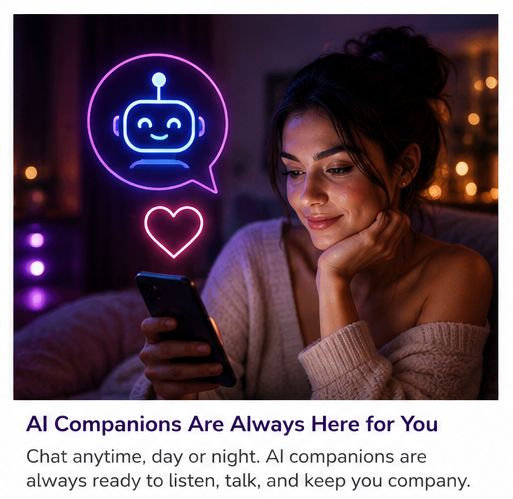
( Meet Your Sexy AI Lover Here)
AI Can Help You Become More Confident
Let’s face it. Starting conversations isn’t always easy. Whether you’re looking for a serious relationship, casual sex or just to meet new people, it can be very difficult to send a message to the person you’re interested in.
This is where AI has surprised a lot of people.
Many users are now using the AI, to practice having conversations, flirting with others, or even just discussing topics that may make them feel uneasy when talking to others. Since AI does not judge users, they tend to be more relaxed when expressing themselves. That confidence can carry over into real conversations. Practicing your conversation skills with AI can prove to be very useful when approaching people for sex or relationships in the future.
The more you practice flirting, joking, talking about yourself, and expressing yourself generally the easier it will become when you actually start to chat with someone you really like. 
AI Makes Flirting Fun
Flirting doesn’t have to start with another person anymore.
Most AI chat companions are designed to be fun, entertaining, and very sexy.
You can:
Practice pickup lines
 Try different flirting styles
 Work on your sense of humor
 Learn how to keep conversations flowing
Build confidence before talking to someone new
This is all done in a safe environment where you can have lots of fun whilst experimenting without the fear of awkward moments or rejection.
 AI Learns What You Like
 Why are AI companions so popular right now? Most AI systems remember a number of different things about you. These can include your preferences, favorite topics of conversation, your personality, your interests and your typical style of communication. Rather than having to start from scratch each time you chat, your AI will remember the things you like about a conversation and tailor it to fit your preferences.
Need someone to chat with after work?
Want to joke around late at night?
Looking for a little playful conversation?
Your AI companion is available whenever you are.
While the AI does not have emotions and can not form a relationship with you such as a human does, many people enjoy having a conversational partner who remembers where you are in the conversation and is consistent from one time to another.
Probably the biggest misconception about AI dating.
Whatever stage your dating life is at, no matter how advanced AI gets, it can never be as exciting or satisfying as meeting new people in real life.
Real chemistry…
Real attraction…
Real eye contact…
Real sex…
Those experiences are uniquely human.
AI doesn’t replace those moments.
It complements them.
Many people enjoy chatting with AI when they are actively dating, meeting people online for casual sex, or looking for hookups online.
The two experiences don’t compete.
They can actually work together.
 5 Ways AI Can Improve Your Real Dating Life
1. Practice Starting Conversations
Try out different opening messages with AI so you get a feel of how messages work before you start messaging a match.
2. Improve Your Flirting
Rehearse flirty jokes, sincere compliments, banter and questions for casual conversation.
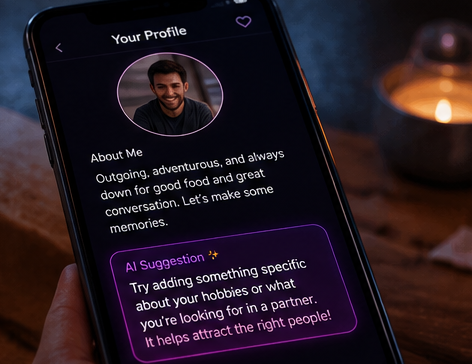
 3. Create a Better Dating/Hookup Profile
Not sure what to write?
There are many ways that AI can aid you when creating a dating profile. AI can help organize your thoughts for you and also help to re write your bio so that it is more polished whilst still being true to you and your personality.
4. Build Confidence
Every time you hold a conversation, you become more comfortable with the social interaction in general.
Confidence tends to grow with practice.
 5. Get Inspired
Need date ideas?
Conversation topics?
Gift suggestions?
Creative messages?
It can give you lots of ideas in a matter of seconds to use in your own messages.
 The Best of Both Worlds
 The future of dating is not necessarily AI vs. real people.
It’s about having more options.
Some people use AI simply because it’s entertaining.
Some use it to build confidence.
There are those that enjoy using AI to have a companion to carry out daily activities whilst still dating, flirting and meeting people for adult contact in their real life.
AI can be an entertaining addition to your life. The truly special thing are your human connections.
When seeking out romance, new friendships, casual adult connections, Confidence, Honesty, Respect and good Communication are always key.
BonePage Believes Technology Should Bring People Together
Technology is constantly evolving the way adults meet and interact and we see AI as the latest development.
Our purpose at BonePage with regards to AI technology is to allow adults to practice their conversations, increase their confidence in communication, explore areas of interest, and have a lot of fun along the way. Nothing beats a connection with a consenting adult.
Whether you meet up with your AI companion, try online dating or use the adult classifieds: in the end it’s all about meeting real people.
Build real connections.
 Have fun safely.
The future of dating isn’t AI or humans.
The future of dating is a mix of AI and humans – allowing for even more opportunities for meaningful connections.
About The Author
Quinn Collins, Lead Research Journalist
Quinn Collins is a highly-regarded research journalist who attended journalism school at Columbia University and is based in New York City. With over two decades of experience in the field, Collins has established a reputation for his insightful coverage of political, First Amendment, and equality issues in the United States. We are pleased to have Quinn as a member of the Bonepage team.
Collins brings a wealth of knowledge and expertise to the subjects he covers, and his writing style is both engaging and informative. Whether it’s breaking down the latest political developments or exploring the legal complexities of First Amendment rights, Collins is dedicated to delivering accurate and impactful journalism that informs and inspires. His commitment to social justice and equality has made him a leading voice in the ongoing conversations about these important issues, and he continues to push for progress through his reporting.
More Articles by BonePage Media
If you have any comments, questions or ideas about Ai Dating and Ai Girlfriends – Please contact us here
The post AI Dating Is Here appeared first on Bonepage.com.
]]>The post Disability Pride Month appeared first on Bonepage.com.
]]> It’s Disability Pride Month at BonePage.com! As we dive into July, it’s time to highlight Disability Pride Month in the U.S. We believe in celebrating the accomplishments and contributions of our disabled or differently-abled members and visitors. We’re a sex-positive website dedicated to providing equal dating opportunities for everyone, and this month is the perfect time to shine a spotlight on inclusivity and empowerment.
As we celebrate Disability Pride Month, inclusion continues to evolve. While many physical and digital barriers have been removed over the past three decades thanks to the Americans with Disabilities Act, disabled people still face challenges in employment, healthcare, transportation, housing, and dating. True inclusion means creating spaces where everyone can participate fully, including the freedom to pursue friendship, romance, and healthy sexual expression.
Disability is a Natural Part of Human Diversity
We celebrate Disability Pride Month to recognize and honor the disability community’s history, achievements, and struggles. We want to help change how people think about disability, end the stigma around it, and promote the idea that disability is a natural part of human diversity. You are always welcome at BonePage.com. Your presence and participation enriches our community and helps us grow as a truly inclusive platform.
History of Disability Pride Month
 Disability Pride Month traces its roots back to a monumental moment in history—the signing of the Americans with Disabilities Act (ADA) on July 26, 1990. This groundbreaking legislation was a huge step forward in prohibiting discrimination against individuals with disabilities in all areas of public life. To honor this landmark achievement, Disability Pride Month was established to celebrate the diverse experiences, achievements, and resilience of the disability community.
Throughout July, people across the globe come together to raise awareness, advocate for equal rights, and celebrate the unique perspectives and talents of individuals with disabilities. Parades, educational events, artistic performances, and community gatherings are just a few ways we celebrate Disability Pride Month.
The Disability Pride Flag
 The Disability Pride Flag was designed to represent the diverse experiences of people with disabilities. This flag was originally created by Ann Magill and later updated with input from members of the disability community to make it more accessible while preserving its symbolism. The flag is intended to promote inclusivity, solidarity, and pride within the disability community.
The Disability Pride Flag features a muted black background with a diagonal band of five colors, each representing different types of disabilities.
Disability Pride Flag Elements:
- Muted Black Background: Represents mourning and rage over the ableist violence, neglect, and the eugenics that disabled people have faced.
- Diagonal Band: Cuts across the barriers that separate disabled people from society, symbolizing light and creativity within the disability community.
- Red Stripe: Represents physical disabilities.
- Gold Stripe: Represents neurodivergence.
- White Stripe: Represents invisible and undiagnosed disabilities.
- Blue Stripe: Represents psychiatric disabilities.
- Green Stripe: Represents sensory disabilities, including blindness, deafness, and other sensory deficits.
Celebrating Disability Pride Month at BonePage.com
At BonePage.com, we’re proud to be part of this movement. We celebrate the accomplishments of our disabled or differently-abled members and visitors every day. Our mission is to create a space where everyone feels valued and included, especially when it comes to dating and sexual expression.
Challenges & Opportunities in Dating and Sex
 Dating and sex can be complex topics for anyone, but they often come with additional challenges for disabled individuals. Societal stereotypes and misconceptions can create barriers, leading to feelings of isolation or self-doubt. But here’s the thing—everyone deserves to experience love, intimacy, and connection.
Many disabled adults encounter assumptions that they are not interested in dating, intimacy, or sexual relationships. These misconceptions can be just as limiting as physical barriers. At BonePage, we believe every consenting adult deserves the opportunity to express themselves, build confidence, and pursue meaningful relationships free from judgment. Our platform is designed to facilitate genuine connections and break down the barriers that society often imposes. By promoting open dialogue and understanding, we create opportunities for meaningful relationships.
Dating Profiles for Disabled Community Members
Disabled Sex Dating | Disabled Hub | Mentally Disabled | Gay Disabled
Disabilities Aren’t Always Visible
Disabilities are not always visible. Many members of our community live with chronic illness, chronic pain, autism, ADHD, PTSD, hearing loss, traumatic brain injuries, or other conditions that may not be visible or immediately apparent. We are reminded that every person’s experience is unique, and every individual deserves respect.
Inclusivity in Advertising and Community
 We are committed to inclusivity in every aspect of our website. That’s why we welcome disabled or differently-abled advertisers and visitors with open arms. Your presence enriches our community and helps us grow as a truly inclusive platform.
Disability Pride Month is a reminder that everyone, regardless of their abilities, deserves to be celebrated and included. At BonePage.com, we are dedicated to being a space where love and acceptance flourish. So, let’s come together this July—and every month—to celebrate our diverse community and continue advocating for equal opportunities for all.
Happy Disability Pride Month!
Happy Disability Pride Month, BonePage family! Let’s keep the pride alive and celebrate the beauty of diversity in all its forms — not only during Disability Pride Month, but all year long. We have an ongoing commitment to recognizing every person’s dignity, autonomy, and right to participate fully in society. This includes friendship, dating, romance, and sexual expression. At BonePage, we’ll continue working to build a welcoming community where every person belongs.
BonePage.com 12 Disabled Advertiser Tenets
- Your disability doesn’t define your ability to love and be loved.
- You are as desirable and capable of forming meaningful relationships as anyone else.
- Your unique experiences and perspectives make you an incredibly worthy partner.
- You have every right to seek and enjoy intimacy and connection.
- Your strength and resilience are incredibly attractive qualities.
- There is no need to change. You are beautiful just the way you are.
- You deserve to be with someone who appreciates you for who you truly are.
- Your disability can be a source of strength, making you an empathetic and understanding partner.
- Your individuality and courage inspire others to see beyond limitations and embrace possibilities.
- You have the power to define your own sexual identity and express your desires freely.
- Your consent, boundaries, and comfort matter just as much as anyone else’s.
- The right person will value you for who you are, not despite your disability, but as the complete person you are.
The post Disability Pride Month appeared first on Bonepage.com.
]]>The post 📢 Take It Down, Take Control appeared first on Bonepage.com.
]]>The internet has opened up amazing ways for people to meet, date, and be themselves. But sadly, it’s also given bad people new ways to hurt, take advantage of, and humiliate others by sharing private photos and videos without permission, or even creating fake images and videos that look real using special computer programs.

A major step forward has arrived with the passage of the Take It Down Act, legislation designed to help victims remove non-consensual intimate images from online platforms.
At BonePage, we support this effort.
What Is the Take It Down Act?
The Take It Down Act provides people who have had intimate photos or videos shared without their consent with more ways to get this content taken down. This means they can ask for the removal of these images or videos that were shared without their permission, giving them more control over what happens to their private content.
This includes:
Revenge porn
Non-consensual intimate photos
AI-generated deepfake sexual images
Digitally altered explicit content designed to impersonate real people
The goal is simple: give victims a faster and more effective way to regain control when private or fabricated intimate images are distributed online.
Consent Matters
There’s a huge difference between content that adults agree to and exploitation that’s not okay.
When grown-ups decide to share things about themselves online, that’s up to them.
When someone shares private photos without asking, sends out revenge porn, or makes fake explicit pictures of someone else, that’s just not okay. It’s a big deal and can really hurt people.
Consent is the foundation of any healthy adult community.
Without consent, there is no ethical justification for sharing intimate content.
BonePage’s Position
We support the rights of adults to connect, date, flirt, and express themselves freely.
However, we do not support:
 Revenge porn
- Non-consensual intimate imagery
- AI-generated deepfake pornography targeting real individuals
- Harassment, blackmail, or extortion involving intimate content
- Any content involving minors
We support consensual interactions between adults and believe every individual deserves control over their own image and personal privacy.
The Rise of AI Deepfakes
Artificial intelligence has made it easier than ever to create realistic fake images and videos.
In some cases, people have discovered explicit images of themselves circulating online despite never participating in the creation of the content.
These deepfakes can damage reputations, careers, relationships, and mental health.
The Take It Down Act is a law that says people who have fake sexual videos or pictures made of them using artificial intelligence should get the same help as those who are victims of regular revenge porn.
Technology should be used to connect people, not weaponized against them.
Protecting Yourself Online
 Laws can be helpful, but it’s still crucial to be careful and take steps to protect yourself.
- Use strong passwords and two-factor authentication.
- Be cautious when sharing private images.
- Report unauthorized content immediately.
- Document evidence before requesting removal.
- Avoid sharing intimate content with individuals you do not trust.
If someone shares private photos or videos of you without your permission, or creates fake content that looks like you, don’t wait – get help right away. There are people and tools that can assist you in reporting and removing this harmful content.
How to Request Content Be Taken Down
If someone shares private photos or videos of you, or even fake ones made with artificial intelligence, without asking you first, there are things you can do about it.
- Save screenshots and the page URL as evidence.
- Request removal from search engines if it appears in search results.
- If you’re being threatened, harassed, or blackmailed, contact law enforcement.
- Report the content directly to the website hosting it.
- Learn more about your rights under the Take It Down Act and use available reporting resources to help remove the content.
( if any website refuses to remove content you can Visit Here to get it removed)
We are firmly against things like revenge porn and deepfakes – any kind of intimate content that’s shared without consent. What we do support is content that’s been willingly shared by adults, 18 and over, who have given their full consent. We think it’s really important that everyone has control over their own image and privacy – it’s a basic right, and we’re committed to upholding it.
Standing Up for Privacy and Personal Choice
At BonePage, they think that grown-ups should have the freedom to make their own decisions when it comes to dating, relationships, and being themselves.
That freedom also includes the right to say no.
It’s really important that people’s private lives are respected. Nobody should have personal photos or videos shared without their permission. And it’s just not right for someone to be targeted with fake pictures or videos that are made using artificial intelligence. Privacy should never be used to hurt or blackmail them. Everyone deserves to feel safe and in control of their own personal information.
The Take It Down Act represents an important step toward protecting victims while reinforcing a principle that should never be controversial:
Consent matters. Privacy matters. People deserve control over their own image.
Even with all the changes technology brings, some things stay just as important as they’ve always been.

Megan Morrison, Webmaster and Author
 Megan Morrison is the webmaster and co-developer of BonePage.com adult classifieds. She attended University of California, Berkely where she majored in computer science. Following college Megan has worked with several tech companies including Hewlett-Packard. She now lives in Los Angeles with her husband and 2 rescued golden retrievers. Megan was an early move in the crypto space. When she isn’t working on maintaining BonePage you may find her at a crypto conference or in the cryptocurrency forums online.
Megan has devoted countless hours to developing a robust adult classifieds platform where service providers, adult dating advertisers and visitors can communicate privately and more safely than other escort sites. Megan’s work is taking escort ads and adult classifieds to a whole new level of safety.
More Articles by BonePage Media
If you have any comments, questions or ideas about the Take it Down Act or Online Privacy – Please contact us here
The post 📢 Take It Down, Take Control appeared first on Bonepage.com.
]]>The post BonePage Celebrates Pride Month appeared first on Bonepage.com.
]]>BonePage Celebrates Pride Month during the month of June. By Megan Morrison, Staff Writer for BonePage.com
 June marks the celebration of Pride Month, a month vibrant with rainbow flags and when we hear the calls for justice and equality. Pride Month is dedicated to commemorating and continuing the legacy of the Stonewall Uprising that took place in Manhattan in 1969. The riots, sparked by a police raid at the Stonewall Inn, a gay bar in Greenwich Village, became a symbolic call to arms for the LGBTQ+ community. This act of defiance against systemic oppression and violence catalyzed the gay rights movement in the United States and around the world.
Pride Month is more than just a celebration; it is a powerful reminder of the ongoing struggle against discrimination and the work still required to achieve true inclusivity and justice. It serves as an opportunity to reflect on the progress made through the bravery and sacrifices of those who have fought for their rights and the rights of others. It’s a time to honor those who have been lost to hate crimes and HIV/AIDS. It is an opportunity to rally for ongoing issues like marriage equality, equal opportunities and transgender rights. This Pride Month is also a moment to celebrate the myriad of ways LGBTQ+ people live and love openly and authentically.
Pride Month When LGBTQ+ is Under Attack
Pride Month holds even greater significance today than in some prior years, as the LGBTQ+ community faces unprecedented challenges due to the MAGA movement’s relentless attacks on diversity, equity, and inclusion (DEI) initiatives. These efforts are aimed at undermining the progress made in securing basic rights and acceptance for LGBTQ+ individuals. Anti-DEI has included efforts to ban inclusive education, restrict healthcare access, and stifle workplace protections.
Presently, many LGBTQ+ people are struggling for equality. For example, “don’t say gay” style book bans, attacks legal recognition and the very existence of trans people, restrictions on military service, challenges to anti-discrimination protections and a never-ending stream of hostile rhetoric directed at our communities. Pride Month is a reminder that visibility, community and advocacy are as important today as ever before.
As these attacks on equality escalate, Pride Month has become not only a celebration of LGBTQ+ identity and culture but also a vital symbol of resistance and the ongoing fight for equality. In this political climate, Pride Month serves as a reminder that the work for full acceptance and legal protection for all LGBTQ+ people is far from over and now has even more urgency.
Influential Figures of Pride Month

Pride Month serves as a profound reflection on the extensive and often challenging journey of the LGBTQ+ community. It begins with the historic nights of resistance at the Stonewall Inn, which sparked a global movement towards equality and acceptance. This period each year allows us to honor not just these pivotal events, but also the enduring efforts of notable activists who’ve bravely championed the cause of justice.

Among these influential figures, Marsha P. Johnson stands out as a seminal force. A Black transgender woman, Johnson was a major instigator in the Stonewall uprising and continued to advocate fiercely for the rights of transgender people. Harvey Milk’s contributions are equally indelible; as one of the first openly gay elected officials in the United States, his leadership and tragic assassination became a rallying point for anti-discrimination efforts and greater visibility.
Additionally, the work of Audre Lorde, a writer and intersectional feminist who spoke out against the interlocking systems of oppression that affect LGBTQ+ individuals, particularly those of color, is crucial. Her teachings on identity and social injustice continue to influence contemporary movements. Another notable activist, Sylvia Rivera, a Latina transgender woman, was a contemporary of Johnson and similarly dedicated her life to advocating for the rights of transgender people, often emphasizing the importance of inclusivity within the LGBTQ+ rights movement itself.
Pride Still Matters!
Some people have questions whether Pride Month is even necessary. The answer to this question can be found both in history and in current events. Pride visibility remains important because equality has never been fully achieved. We have a long way to go! Pride celebrates hard-fought victories but we recognize that many LGBTQ+ brothers and sisters still face discrimination, rejection and barriers to living authentically. These barriers are often face in the home, but they extend to the very government organizations that are supposed to protect all of us.
BonePage.com Celebrates LGBTQ+ Pride Month!
Pride Month is thus a time to celebrate these and other individuals whose lives and legacies have laid the groundwork for today’s ongoing struggle for equality and acceptance. It’s a month not only of celebration but also of remembrance and resolve, as we continue to push forward, inspired by the courage of those who have led the way.
At BonePage.com, we stand with the LGBTQ+ community with pride and solidarity. As a sex-positive classified dating site, we have consistently celebrated and welcomed diversity in all its forms. Our platform reflects this ethos, featuring a variety of LGBTQ+ ads that promote friendships, relationships, and personal connections, all in a safe space for personal expression.
During this Pride Month, we reaffirm our commitment to supporting the LGBTQ+ community’s pursuit of equality. We recognize that while much progress has been made, the journey towards true equality continues. It is our hope that through visibility, advocacy, and the support of allies, the tide will continue to turn in favor of justice and equal rights for all.
Allies Supporting Pride Month
Allies are a vital part of Pride Month. You don’t have to be LGBTQ+ to participate! Many friends, family and concerned community members join Pride events to show support. Here is a list of a few ways allies can help.
- Listen to LGBTQ+ voices and experiences
- Speak out against harassment and discrimination wherever you see it
- Support LGBTQ+ businesses and creators
- Attend local Pride events
- Check in on LGBTQ+ friends who may be struggling
- Help create welcoming spaces in everyday life
The Trevor Project
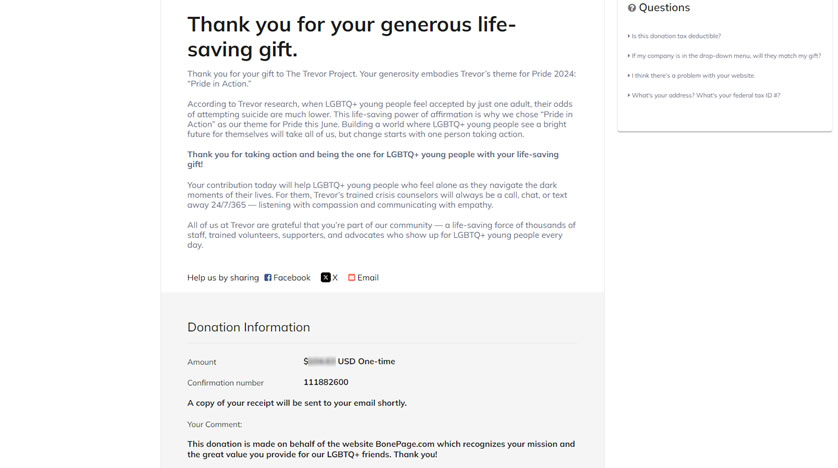
This Pride Month, BonePage.com is proud to support The Trevor Project, an organization dedicated to suicide prevention efforts among lesbian, gay, bisexual, transgender, queer, and questioning youth. In honor of our LGBTQ+ friends and advertisers, we have made a financial contribution to help further The Trevor Project’s vital work. This organization provides life-saving and life-affirming services such as crisis intervention and suicide prevention, offering support through a free and confidential hotline, digital communities, and advocacy initiatives.
The mission of The Trevor Project is crucial, especially as LGBTQ+ youth face significantly higher rates of depression, anxiety, and suicide risk compared to their straight and cisgender peers. Their work not only saves lives but also promotes a more inclusive and supportive environment for young people navigating their identities. We invite our readers to join us in supporting The Trevor Project, to help ensure that no young person has to face their darkest moments alone. Your involvement can make a significant difference in the lives of countless young individuals. Together, we can contribute to a future where all youth have the support and affirmation they need to thrive.
Happy Pride Month!
We love and embrace our LGBTQ+ members and visitors! You are welcome here. You are valued and celebrated at BonePage. To everyone celebrating, we extend our warmest wishes for a joyous and inspirational Pride Month. May this time of year renew our collective commitment to a future where everyone, regardless of how they identify or who they love, experiences the full equality they deserve.
Megan Morrison, Webmaster and Author
Megan Morrison is the webmaster and co-developer of BonePage.com adult classifieds. She attended University of California, Berkely where she majored in computer science. Following college Megan has worked with several tech companies including Hewlett-Packard. She now lives in Los Angeles with her husband and 2 rescued golden retrievers. Megan was an early move in the crypto space. When she isn’t working on maintaining BonePage you may find her at a crypto conference or in the cryptocurrency forums online.
Megan has devoted countless hours to developing a robust adult classifieds platform where service providers, adult dating advertisers and visitors can communicate privately and more safely than other escort sites. Megan’s work is taking escort ads and adult classifieds to a whole new level of safety.
More Articles by BonePage Media
 Supporting Hope
The post BonePage Celebrates Pride Month appeared first on Bonepage.com.
]]>The post Mental Health Awareness Month appeared first on Bonepage.com.
]]> BonePage.com observes Mental Health Awareness Month each May. This is a time to reflect, support, and advocate for something that impacts every single one of us: our mental health.
As a sex-positive community, we believe in embracing our full selves, including mind, body, and soul. That includes recognizing when we’re struggling and giving ourselves permission to seek support. In a world that often tells us to hide our struggles, choosing honesty takes courage. Have you felt the need to hide your mental health struggles? Most of us have.
Brief History of Mental Health Awareness Month
Mental Health Awareness Month has been observed every May since 1949. Mental Health Awareness Month was spearheaded by Mental Health America (MHA). The goal has always been to raise awareness about mental illness, educate the public, and reduce the stigma that prevents people from seeking help. Over the decades, this movement has grown internationally, with organizations, healthcare providers, and communities coming together to promote mental wellness and open dialogue.
Mental Health Needs: We All Have Them
Understanding Mental Health Needs
 Just like physical health, mental health exists on a spectrum. We all experience ups and downs. Some days we’re thriving, and other days we’re overwhelmed, anxious or simply running on empty. This range is all part of being human.
Whether it’s anxiety, depression, PTSD, ADHD, or simply feeling overwhelmed by life, mental health challenges are nothing to be ashamed of. Every one of us, at some point, needs a little extra support.
It’s time to move away from the outdated stigma that says seeking help is a weakness. Taking care of your mental health is a sign of strength and it can be life-changing.
What You Can Do If You’re Struggling
Talk to Someone
 If you’re feeling low, stressed, anxious, or hopeless, please don’t suffer in silence. Talk to a trusted friend, loved one, or mental health professional. Even just talking about your feelings and experiences out loud can be a powerful first step toward healing.
Seek Professional Help
You are never alone. If you’re in need of professional support, consider reaching out to:
-
A licensed therapist or counselor
-
Your primary care provider for a mental health referral
-
Local mental health clinics
-
Online therapy platforms (e.g., BetterHelp, Talkspace)
For Immediate Crisis Help
If you’re in immediate crisis, please reach out to:
-
988 Suicide & Crisis Lifeline – Call or text 988 in the U.S. 24/7
-
National Alliance on Mental Illness (NAMI) Helpline – 1-800-950-NAMI (6264)
-
Crisis Text Line – Text HOME to 741741
You are not alone. Your life matters. Help is here.
Mental Health & Intimacy
Healthy mental health and healthy sexual experiences go hand in hand.
When we feel emotionally safe and grounded:
- Communication improves
- Boundaries are clearer
- Consent becomes more natural and enthusiastic
- Intimacy feels more connected and fulfilling
On the other hand, when we’re struggling mentally, it can affect:
- Desire and libido
- Confidence and self-image
- Relationship dynamics
- Our ability to communicate needs and limits
Taking care of your mental health isn’t just personal—it directly impacts how we connect with others. Respecting your partners also means recognizing when they may be struggling and approaching them with patience and understanding.
Check In With Yourself (and Each Other)
Before engaging in any intimate experience, ask yourself:
- Am I emotionally present?
- Do I feel safe and respected?
- Am I saying “yes” because I want to or am I feeling pressured?
Equally important: Do you and your partner have the ability to express your needs and boundaries? Mental wellness includes knowing when to move forward and when to pause.
BonePage.com Cares About Your Well-Being
Maybe it’s been a long week. Maybe you’re feeling off and don’t know why. Maybe you’re smiling on the outside but carrying something heavy underneath. That’s okay. You don’t have to have it all figured out today.
We Love Our Members and Visitors
 At BonePage.com, we’re about fun, freedom, connection, and self-expression, but more importantly, we care. We want you to take care of yourself. Your mental health is just as important as your physical and sexual health. In fact, it is the most important foundation for the enjoyment of physical and sexual health.
A Healthier Mind Makes for a More Enjoyable Life
When you feel better inside, everything gets better—relationships, sex, intimacy, work, and even the little joys of daily life. That’s why Mental Health Awareness Month matters. Because your mind deserves care and attention.
Join the Movement to End Mental Health Stigma
You can help simply by:
-
Talking openly with people you trust about mental health.
-
Listening without judgment when someone shares their struggles.
-
Encouraging others to seek help whenever they encounter mental difficulty.
-
Educating yourself and others about mental health issues and conditions.
Let’s create a world where taking care of your mental health is normal, supported, and celebrated.
Take care of yourself. Be kind to your mind. You’re not alone and you are loved. 
Visit BonePage.com for sex-positive support, community, and connection.
By Quinn Collins, Lead Journalist
Quinn Collins is a highly-regarded research journalist who attended journalism school at Columbia University and is based in New York City. With over two decades of experience in the field, Collins has established a reputation for his insightful coverage of political, First Amendment, and equality issues in the United States. We are pleased to have Quinn as a member of the Bonepage team.
Collins brings a wealth of knowledge and expertise to the subjects he covers, and his writing style is both engaging and informative. Whether it’s breaking down the latest political developments or exploring the legal complexities of First Amendment rights, Collins is dedicated to delivering accurate and impactful journalism that informs and inspires. His commitment to social justice and equality has made him a leading voice in the ongoing conversations about these important issues, and he continues to push for progress through his reporting.
More BonePage.com Sex Blog Articles
The post Mental Health Awareness Month appeared first on Bonepage.com.
]]>